
At Watches and Wonders 2022,all the attention was on the new Rolex Deepsea Challenge.
And understandably so:it was a spectacular watch,representing a whole new collection and a bold leap in technical innovation.
But in the shadow of this star,other fascinating new arrivals went unnoticed.
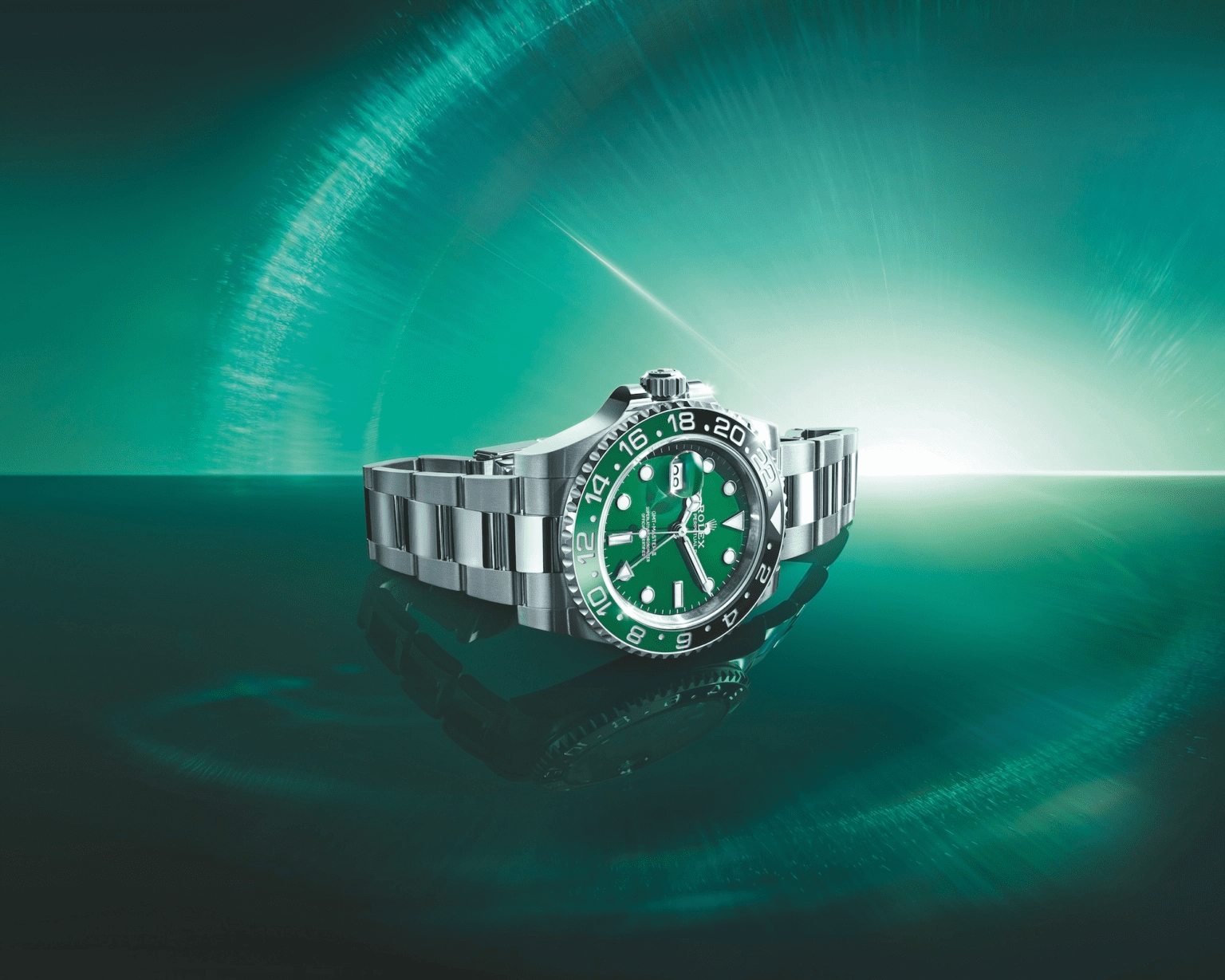
Among them,an unexpected piece:the left-handed white gold GMT-Master II,nicknamed the”Sprite.”
Not only did it offer a luxurious take on an already unusual design,but it also quietly introduced a first in Rolex history:a dial made entirely of ceramic.
The Left-Hander’s Dilemma
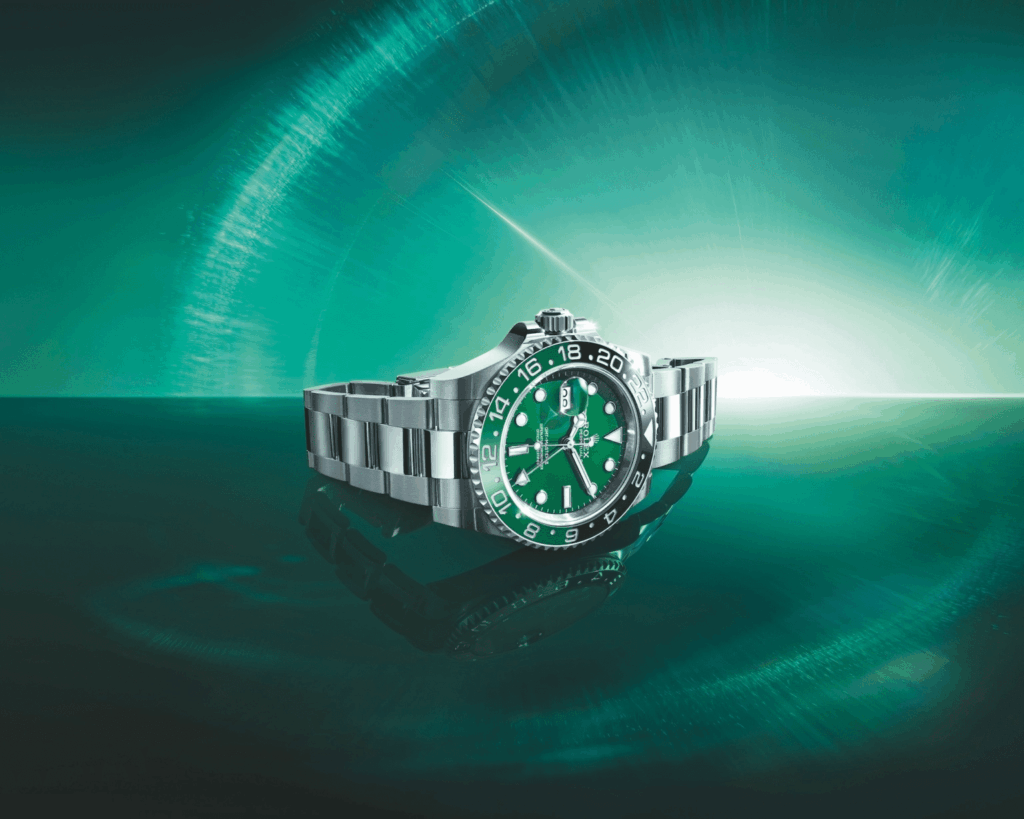
The GMT-Master II”Sprite,”also known as the”Destro,”is a puzzling watch.
If you’re used to wearing your watch on your left wrist—like most people—the crown and date on the left immediately seem odd.
I remember handling it for the first time and instinctively trying to rotate the bezel so it looked”right.”
But of course,that’s not a design flaw.It’s meant to be worn on the right wrist.
Once you accept that,everything starts to make sense more or less.
The steel version of the”Sprite”had already made an impression with its two-tone green and black Cerachrom bezel.
But Rolex didn’t stop there.
This year,the brand launched a white gold version(reference 126729VTNR)with a dial that completely changes the game.
Rolex Replications A ceramic first
Yes,the real headline here isn’t the precious metal—it’s the dial.
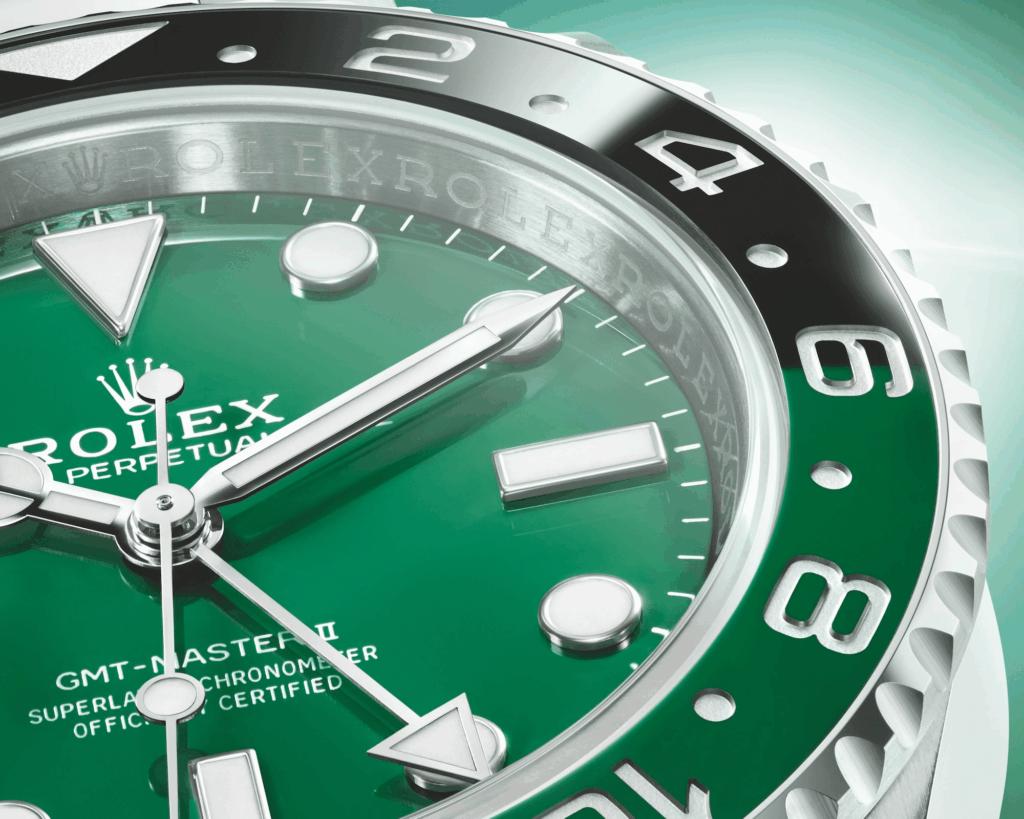
This is the very first ceramic dial ever produced by Rolex,in this case a brilliant green Cerachrom.
Rolex has been perfecting its mastery of ceramic since 2005,first with black bezels,then two-tone bezels,and finally applying this material to a dial.
Like the brand’s natural stone dials,the ceramic disc is fixed to a brass base.
The result is a perfect harmony between the dial and the bezel,especially in daylight.
The uniform and brilliant green overall effect exudes a bold coherence.
The asymmetrical design of the”left-handed”model thus appears more assertive,almost refined,and no longer simply experimental.
In detail
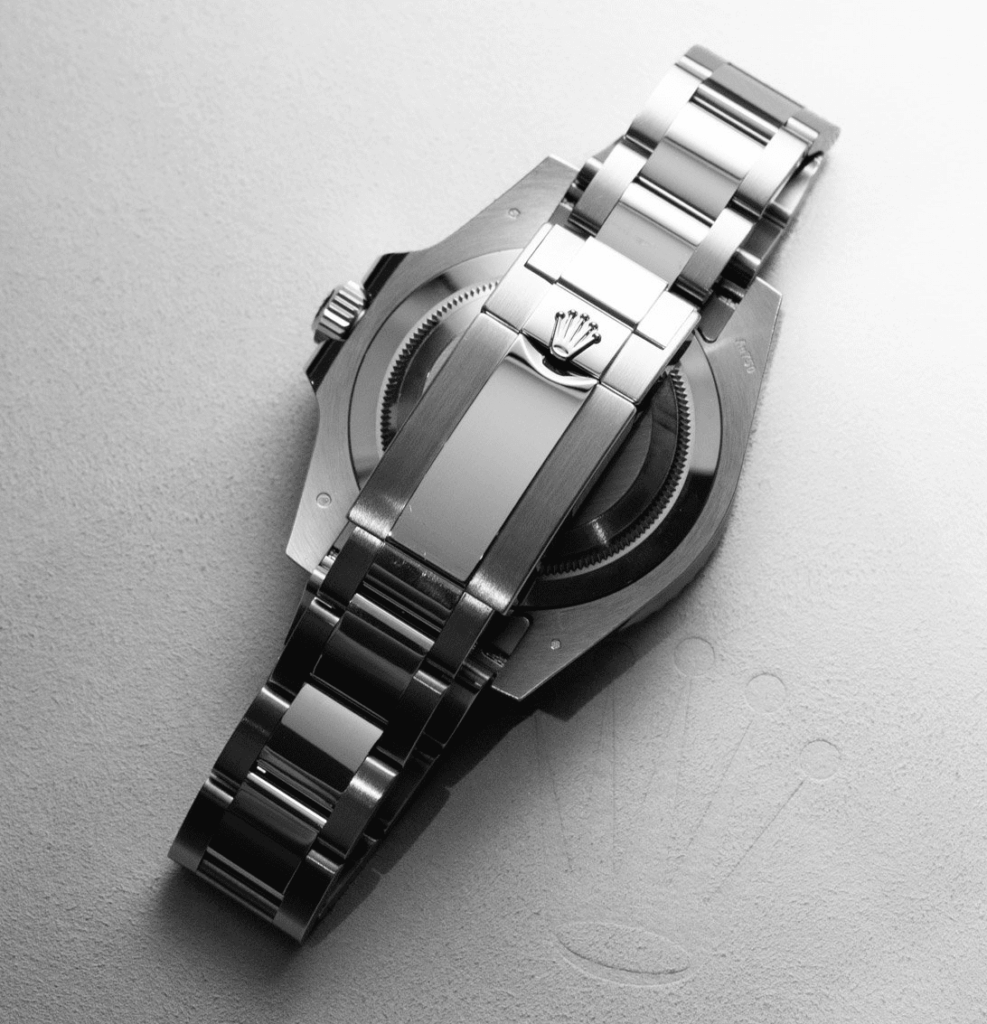
The white gold”Sprite”retains the same characteristics as the steel version:a 40 mm case,11.9 mm thick,a white gold Oyster bracelet with brushed and polished finishes,and an Oysterlock clasp.
Note:unlike the steel model,there is no version with a Jubilee bracelet.
The dial features applied indexes and white gold Mercedes hands with blue Chromalight luminescent inserts.
One subtle detail distinguishes this version:the GMT hand has a steel-colored base instead of green—an improvement for readability.
The watch is powered by the caliber 3285,a COSC-certified movement with a 70-hour power reserve.
It incorporates all the in-house innovations:Chronergy escapement,Parachrom balance spring,and resistance to shocks and magnetic fields.
Understated luxury and bold design
What’s surprising is how much more natural this new”Sprite”feels than the 2022 model.
Perhaps it’s the habit of inverted design,or perhaps the green ceramic dial that adds a welcome sense of coherence.
This isn’t a conventional GMT—and it doesn’t pretend to be.
This is Rolex Replications venturing into eccentric territory,but with rigor and elegance.
And while we’re at it,we might as well go all the way with an ultra-shiny green ceramic dial.
What’s next for ceramic?
Now that Rolex has taken the plunge with a ceramic dial,we can’t help but dream about what’s next.
Ceramic is not only scratch-resistant,but also colorfast and highly durable.
Will we see a red dial matching the bezel of a future precious metal”Pepsi”?
An Explorer with a matte black dial?Or something even bolder?
Rolex Replications In conclusion
The white gold”Sprite”is a watch we weren’t expecting from Rolex.
It’s left-handed,monochrome green,and introduces a material that could well change the way Rolex makes its dials in the future.
And yet,it works—because every choice seems thoughtful and justified.
It’s not a watch for everyone.You have to embrace its quirks and dare to flaunt them.
But if you’re ready for that,this GMT-Master II”Sprite”is more than an original variation—it’s a discreet revolution on the wrist.
Author

Related posts
The Rarest Rolex Replications In The World
In the world of luxury watches,few names evoke prestige,desirability,and status like Rolex. But within the world of the crowned house,there are models...
The History Of Fake Rolex Watches:Evolution,Models
Rolex is undoubtedly one of the most iconic and respected watch brands in the world. Founded in 1905 by Hans Wilsdorf and...
The 10 Rolex Replications Watches That Appreciate The Most
Rolex watches signify exclusivity and luxury. Owning a piece from this prestigious watchmaker can be more than just a whim;it’s a great...
FAKE ROLEX WATCHES OYSTER PERPETUAL SKY-DWELLER
Elegant and technically refined,the Oyster Perpetual Sky-Dweller was designed for those constantly on the move,from one end of the planet to the...
Fake Rolex Watches Overlooking Underrated
In watch collecting,enthusiasts often pursue rare and prestigious pieces like Submariners and Daytonas,overlooking underrated classics that stand out in their own right....
Rolex Replications Greatest Icons
Rolex,the Swiss watchmaking firm,is almost certainly one of the most celebrated in history,renowned for the quality of its creations and its distinctive...