
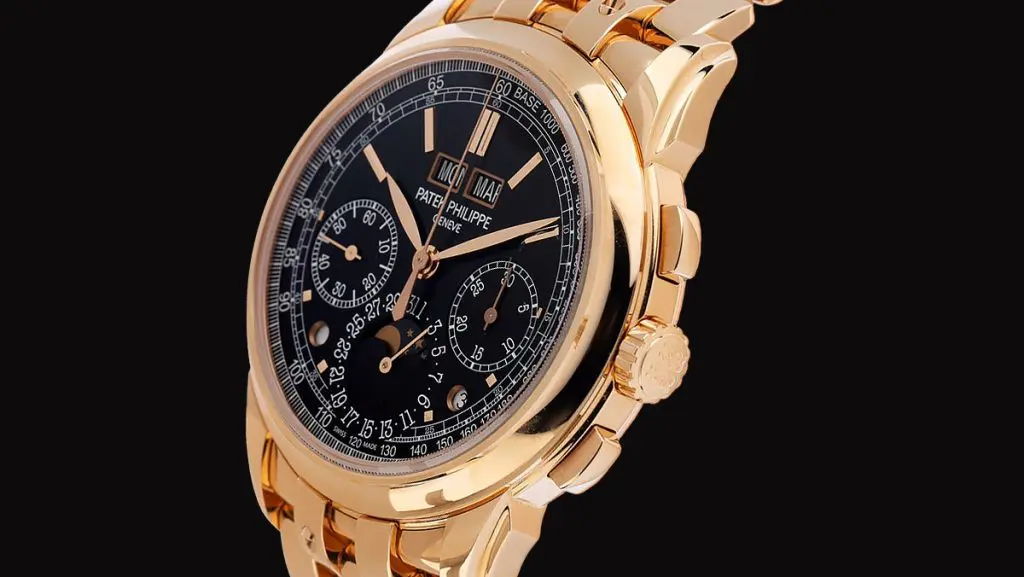
Unlike,for example,the moon phase display,a perpetual calendar is one of the major complications that turn a watch into a true masterpiece.
Such a watch is often the crowning glory of a watch collection.
We introduce you to this masterful complication and show you the most sought-after models.
What are complications?
Complications in mechanical movements are additional functions that go beyond the usual display of hours,minutes,and seconds.
They significantly increase the functionality of a watch and also significantly increase its value.
Major complications,and thus high watchmaking art,include chronographs,tourbillons,repeaters,and perpetual calendars.
Minor complications include the date,day of the week,and moon phase displays,as well as automatic winding,which winds a watch automatically while wearing it.
What is a perpetual calendar?
The perpetual calendar is a function that displays the current anniversary,taking into account both leap years and varying month lengths.
It adds a February 29th every four years.
Such a clock only needs to be adjusted once and will then run correctly for many years–provided the clock is never stopped.
The term”perpetual”is relative,however.
Strictly speaking,watches with a perpetual calendar will display the date correctly until the year 2100 without needing to be adjusted.
However,in the year 2100,some clocks will switch from February 28th to February 29th,even though there is no leap year in that year.
This is due to a far-reaching change to our calendar dating back to the 16th century.
This requires a small manual adjustment every 100 years,making a perpetual calendar,strictly speaking,a 100-year calendar.
In contrast to watches with a perpetual calendar,watches with annual calendars are much less complex in their construction.
Their mechanism takes into account the differences between months with 30 and 31 days.
February is treated like a normal 30-day month.
For this reason,these watches must be manually corrected once a year,at the end of February.
How does a perpetual calendar replica watches work?
Different manufacturers offer different solutions,but they all have one thing in common:First,each month is assumed to have 28 days.
On the 28th of the month,the movement sets how many more days need to be added.
This refers to the days up to the 30th or 31st of a month,or in leap years,up to February 29th.
The four-year cycle for leap years is controlled by a program wheel on the month display.
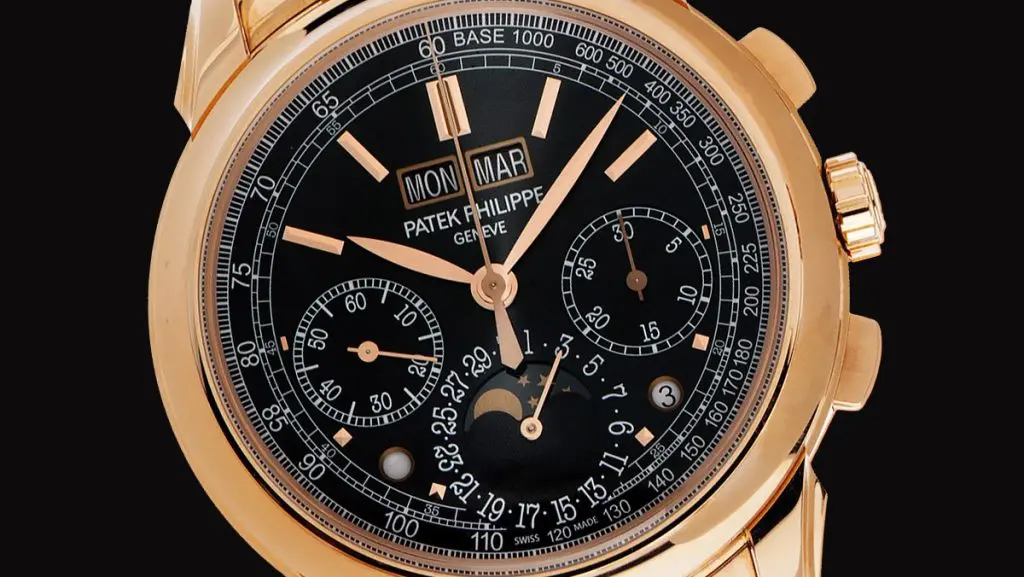
What does the dial of a perpetual calendar look like?
The dials of watches with a perpetual calendar naturally look different.
They are usually supplemented by one or two subdials that allow the calendar display,such as the day and month,to be read.
A particular challenge is the clear design of the dial.
The most sought-after models
The perpetual calendar is a highly sought-after complication and is often found in watches from renowned luxury manufacturers such as Audemars Piguet,IWC,and Patek Philippe.
Patek Philippe Replica Watches Perpetual Calendar
The Geneva-based manufacturer is known for its exquisite complications.
In 1925,Patek Philippe launched the first wristwatch with a perpetual calendar.
Since then,many watchmakers have taken up this challenge.In the 1940s,Patek Philippe achieved another masterpiece:
The company launched a chronograph with a perpetual calendar.
The first automatic watch with such a complication followed almost 20 years later.
The Grande Complications series includes masterful models that combine one or more complications,such as the Patek Philippe Grande Complications Perpetual Calendar replica watches,reference 5270/1R-001 with a moon phase display:
Author

Related posts
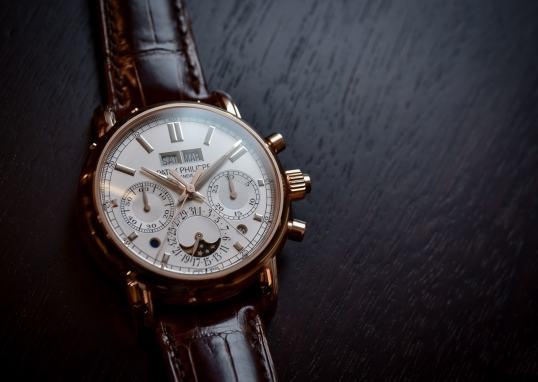
Patek Philippe Fake Watches With Complex Functions
A series of events on Patek Philippe watches with complex functions-Perpetual Calendar combined with Chronograph. The Particularly Complex 5204 Model The 5204’s...
Read out all
Which Patek Philippe Replicas Watches Should You Buy?
When it comes to luxury watches,Patek Philippe is an absolute benchmark. What sets this brand apart is its exceptional craftsmanship,passed down through...
Read out all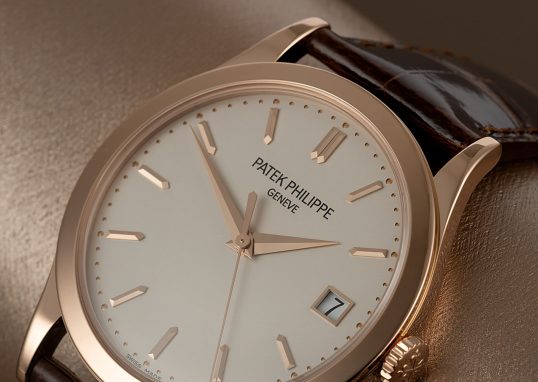
Fake Watches Patek Philippe Calatrava
The Calatrava,an iconic piece from the Patek Philippe manufacture,continues to captivate watch enthusiasts. What makes it so special that it shines despite...
Read out all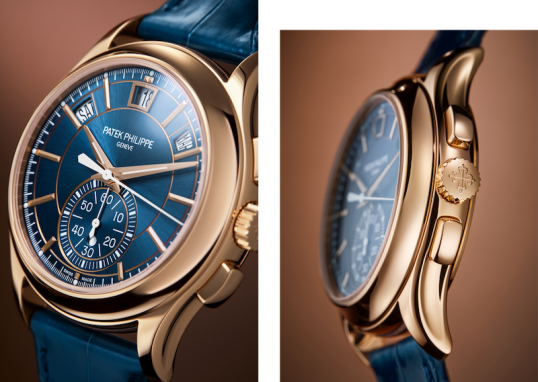
REPLICAS WATCHES PATEK PHILIPPE COMBINES TWO
Patek Philippe has combined two of its most highly regarded complications in the reference 5905R-010,which features an automatic flyback chronograph and an...
Read out all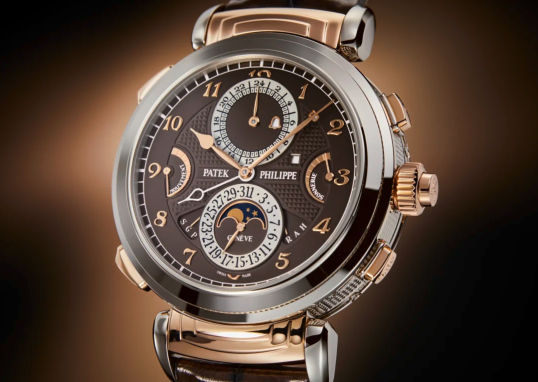
Patek Philippe Travel Time Fake Watches
Travel is more than just getting from one place to another:it’s about immersing yourself in new cultures,discovering unexpected landscapes,and experiencing life-changing moments....
Read out all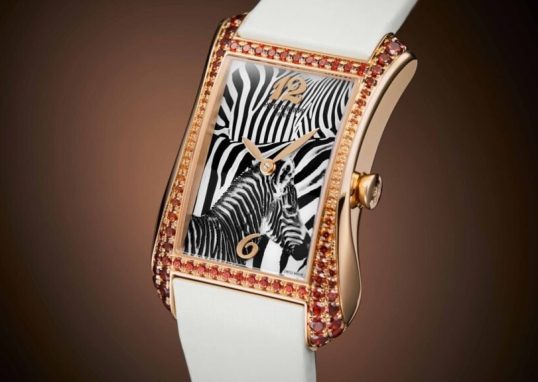
Patek Philippe’s New Gondolo Serata’Zèbres’Replicas Watches
A Patek Philippe that transforms the watch into an aesthetic animal,where Art Deco elegance meets the visual rhythm of the African savannas:Gondolo...
Read out all